The short answer: Retailers are trimming their assortments to make room for items that earn more per foot, and the first SKUs to go are the ones a buyer cannot defend in a spreadsheet. You keep your shelf by knowing your numbers before the buyer does, cutting your own weakest item first, and walking into the review with a plan that makes the whole category better, not just your brand.
For a few years, the default answer at many retailers was more: more brands, more flavors, more sizes. That is changing. Retailers are now asking which items they can live without, and they are not waiting for the brand to volunteer.
If you sell into a chain, the question is not whether your items will be reviewed. It is whether you will know your own numbers better than the buyer does when they are.
Why this matters right now
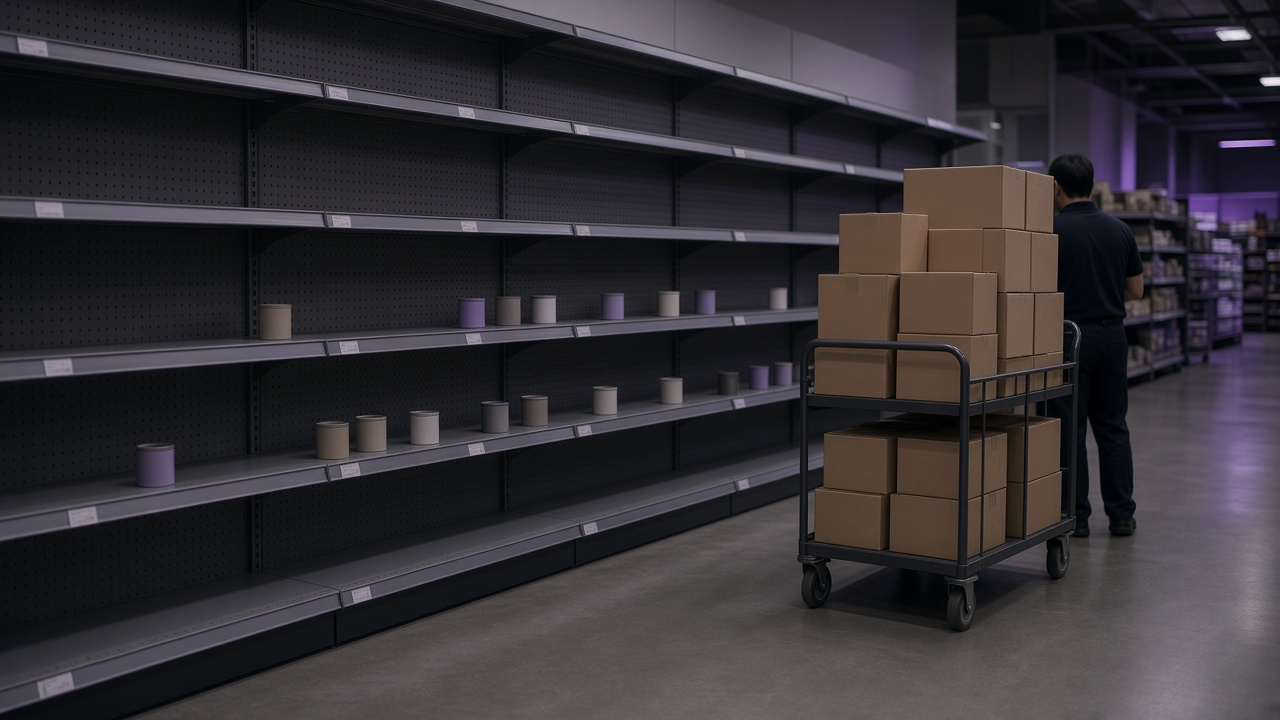
The cuts are public. Food Trade News reported on Sept. 29 that BJ’s Wholesale Club plans to remove about 20% of its SKUs over the next couple of years, taking a legacy club from about 7,500 items to roughly 6,000 to 6,500. The same report noted that Dollar General has removed more than 1,500 SKUs over the past few years and plans a net reduction again in 2026, and that PepsiCo planned to cut nearly 20% of its own U.S. SKUs in the first half of this year.
Then, on Nov. 11, Grocery Outlet told investors it had reduced “elements of our everyday assortment” to make room for more opportunistic, deal-driven product, Grocery Dive reported. Its comparable store sales turned positive for the first time in four quarters, up 0.5%.
Even the way retailers buy is getting leaner. Kroger told investors it wants to source more than 10% of its goods directly, up from less than 1%, to “take layers out of the chain,” Grocery Dive reported on Nov. 9. Different chains, same direction: fewer items, fewer middlemen, more scrutiny on every slot.
What a buyer looks at when the set gets smaller
A buyer trimming a set is not judging your brand story. They are ranking items on a short list of measures and looking for the ones at the bottom. In our experience the list looks like this.
- Sales per store per week. Not total sales. An item in 300 stores can look big and still sit at the bottom of the category on units per store.
- Whether the sale is new. If your item disappears and most of its shoppers just buy the item next to it, the buyer loses little. If they leave the category or the store, you are hard to cut. Buyers call this incrementality.
- Margin dollars for the space. A slow item with a thin margin is the easiest cut in the set.
- Trouble at the dock. Late trucks, short cases, missing labels and deductions make an item expensive to carry. We covered those risks in The Supply Chain Risks That Cost You the Shelf.
- Promo dependence. An item that only sells on deal tells the buyer the base price is wrong.
- Its role in the set. Does it bring a new shopper, fill a price point, or anchor a trend? Or is it the fourth vanilla?
Our founder spent time at Bath & Body Works, where the store was the whole business and every item had to earn its space by moving. A smaller set at any retailer works the same way. The space is rented, and the rent is paid in units.

Why small brands are exposed
Large brands get cut too, but they usually see it coming. They have category data, a sales team that talks to the buyer every week, and items that lead the set. Small brands tend to have three weak spots.
- One slow item drags down a good one. A brand with a strong hero and two weak flavors looks average on the buyer’s report. The buyer may cut the whole line rather than pick through it.
- No one is arguing for you. If your broker or distributor rep is not in the review, your item is a row on a sheet. We wrote about what to expect from them in When the Broker Is Doing Your Job.
- You find out late. Many small brands learn about a cut from a discontinue notice or a markdown deduction, after the decision is final.
None of that is about the product. It is about being ready for a conversation the buyer is going to have with or without you.
The SKU defense plan you can run this month
Cheapest and most important steps first. Most of it is a spreadsheet and a phone call.
- Pull your own numbers first (one afternoon, free). For each retailer, list every item with its stores, units per store per week, and the category average if your broker or the retailer’s portal shows it. Rank your items from best to worst. If you cannot build this list, the buyer has information you do not, and that is the first fix.
- Cut your own tail before they do (one decision, often saves money). If one item sits at the bottom of the category, offer to drop it and move its space to your best seller. A brand that volunteers a cut looks like a partner. A brand that defends every item looks like a problem. We went deeper on this in Your Hero SKU Is Lying to You.
- Prove you bring someone new (a week, low cost). Use your reviews, a short customer survey, or loyalty data if the retailer shares it, to show what your buyer would do if you disappeared. “Most of our shoppers do not buy anything else in this aisle” is the strongest sentence in a line review, but only if you can support it.
- Clean up the dock (ongoing, free to low cost). Check your on-time and in-full record and your deductions with that retailer for the last six months. Fix the cheap problems now, such as case labels, lead times and order minimums, so the operations team is not voting against you.
- Check your promo habit (one hour, free). If most of your units move on deal, cut back to a few well-timed events and show the buyer the base rate. We explained why in Trade Spend Is Not Marketing.
- Write a one-page category story (one day, free). Not a brand deck. One page on what your items do for the category: the shopper you bring, the price point you hold, the trend you lead, and your plan for the next six months. Buyers keep items that make their category look smart.
- Ask for the calendar (one email, free). Ask your buyer or broker when the next review for your category happens and what the retailer is looking for. Then send your one-pager a few weeks before, not the week of.
If you get cut anyway
Sometimes the numbers say go. How you leave decides whether you come back.
- Get the terms in writing. Ask how remaining inventory will be handled, who pays for markdowns, and the last order date, so a discontinue does not turn into a surprise deduction later.
- Ask what would bring you back. A buyer will often tell you exactly what was missing: a price point, a pack size, better velocity elsewhere. Write it down.
- Keep the relationship warm. Send a short thank-you and a note a few months later with proof from other retailers. Buyers change seats and categories, and they remember who was easy to work with.
- Move the volume. Shift the freed-up inventory and attention to the accounts where you are winning. A cut at one chain is a reason to double down where velocity is strong, as we laid out in The First 90 Days on Shelf.
Next step
Keeping a shelf is the same work as winning one, done every quarter instead of once. Our pillar post, Go-to-Market Strategy Lessons From 34 Years of Launching Consumer Brands, covers what separates the brands that keep their space from the ones that lose it. At Vantage Business Consulting, we help consumer brands build the item-level plan a buyer wants to see before a review, so a smaller set is a chance to gain space, not lose it. If you are planning a launch, relaunch or line review, start with the free Launch Scorecard below.