A makeup artist was brushing HD makeup onto my face that felt like clay, and all I could think was: What have I done? I’m not good looking enough to be on camera. Why me?
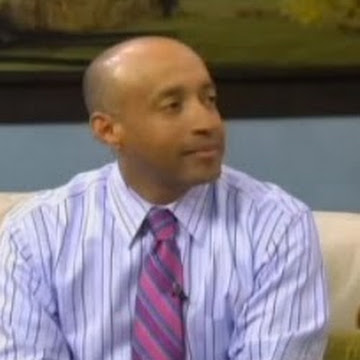
I was minutes away from a live interview on Channel 3’s midday show in Phoenix, there to explain the Affordable Care Act. My wife was at home watching on TV, hoping I didn’t mess up. As you can see, I am mic’ed up. I look calmer than I felt.
How I got in that chair
In 2011 I left consumer products for a job I never expected: Senior Manager of Retail Marketing at Blue Cross Blue Shield of Arizona. Health care reform was coming, and the company wanted someone to plan and lead how it would talk directly to consumers. I had spent my career on shampoo, bath products and laundry brands. Now I was in health insurance.
I also had something nobody else in marketing had. I was the only one holding an Arizona producer’s license and a Medicare certification. That one detail shaped the next two years.
Because I was licensed, the company enrolled me in a media and crisis communication class with an outside consultant. Blue Cross already had paid-for segments on afternoon shows in Phoenix and Tucson, and they wanted someone to explain the Affordable Care Act on air. That someone was me.
On camera
It was the first time I had ever talked about insurance on camera. The job was simple to describe and hard to do: explain what the law actually did, what the new exchange was going to look like, and how people could select their own health care, all in a few minutes, to viewers who had heard plenty of noise about the law and very little explanation.
I didn’t do it alone. Renee Hunt prepped me for every single appearance. Fittingly, she is now Staff VP of Brand and Reputation Management at Blue Cross. I would drive to the station while she prepped me, and for every appearance we had an objective: what we wanted to communicate, and how we could guide the conversation on air toward it.
I also learned the hosts of these shows are pure professionals. They can take two minutes of small talk and make it sound like they were experts.
As for me, I had to learn to slow down and enunciate. Words that sound clear in a conference room can turn to mush on TV. I also learned that if you try to explain everything, the viewer remembers nothing.
Twenty seminars in movie theaters
At the same time, we were rolling out more extensive Medicare plans. The company asked me to run in-person seminars for seniors aging into Medicare, to walk them through their options before the enrollment period. Along the way I did a few media appearances on Medicare as well.
We scheduled more than 20 of them, some at our headquarters and many in movie theaters around the state, in places like Sun City, Prescott, Peoria and Surprise. Alison McGowan, who worked for me, organized them and kept me in line and compliant at every stop. She is still there too, now a senior manager running commercial outreach and strategic programs.
I would stand at the front of a theater and talk about Medicare to rooms of people facing one of the biggest decisions of their retirement.
Here is the part most people don’t know. In a Medicare seminar, you cannot recommend a plan. You can’t tell anyone which one to pick or how they should sign up. You give them information and let them decide for themselves.
That was harder than it sounds, because after every talk people came up to me with the same question: “What should I do?” I could never answer it. What I could do was make sure they knew they had choices, what those choices were, and what each one meant. They had to manage their own risk based on their own tolerance for it. My job was to make the decision possible. Making it was up to them.
My favorite moment had nothing to do with insurance. I can look like I come from a lot of different places, and some people in those rooms assumed I was from another country. After one seminar, a gentleman came up and asked me what country I was from. I told him Denver was the country I grew up in.
What it taught me
Between the TV segments and the theaters, I saw the same thing over and over. People are starving for information. They want it, they need it, and they rarely get it in a form they can use. They need it delivered simply, concisely, and in pieces small enough to digest.
That last part is the one I had to learn. My instinct was to over-explain and cover every exception in case someone asked. But people need time to absorb what you just said before you hand them the next piece. Give them too much at once and they walk away with less than if you had given them a little.
Those two years made me a better speaker and a better teacher. When I stand in front of a class today, I still think about those theaters. Say it clearly, say it in small bites, and then stop long enough to let it land.
The same goes for any founder explaining a product. Your customers, your buyers and your investors are all hungry for what you know, and most brands bury them in it. Pick the three things that matter most, say them plainly, and trust people to ask for the rest.
Carlton Hawkins is the founder of Vantage Business Consulting.