The short answer: Store brands hit a record 23.8% of U.S. unit sales in the first half of 2026, per PLMA and Circana, and fewer shoppers assume the name brand is better. A premium holds only when the shopper can see one clear reason it is worth the gap. Measure the gap, put the reason on the front of the pack, and manage the ticket with size, not discounts.
Ask a founder who their competitor is and you will hear the name of another brand: the one with the bigger ad budget, the one that just raised money, the one that copied their bottle. Then walk the aisle with them. The product actually sitting next to theirs, at a lower price, in a lookalike pack, is very often the store brand.
That is the comparison the shopper makes, and shoppers are making it more often. This post covers what the latest store brand numbers say, why the store brand has become the reference price in many categories, where premium brands lose the comparison, and a six step plan to earn your price gap that you can run this month.
What the numbers say
The Private Label Manufacturers Association (PLMA), the trade group for store brand makers, reported on July 8, 2026 that store brands reached a record 23.8% unit share of the U.S. market in the six months ending June 14, using Circana data. Store brand dollar share was 21.2%, just off its all time high.
The detail that matters for pricing is underneath. In the same period, store brand unit sales rose 0.2% while national brand units fell 0.5%. In dollars it ran the other way: national brands grew 2.2% and store brands were flat. In plain terms, national brands kept growing revenue mostly by charging more, while shoppers kept moving units to the store brand. PLMA President Peggy Davies said the gap between unit and dollar sales “reflects, in part, fluctuating national brand pricing.” PLMA has a point of view here, so weigh the framing, but the Circana numbers are the numbers.
This is not a one season blip. PLMA’s 2026 Private Label Report put 2025 store brand sales at a record $282.8 billion across all outlets, up 3.3% in dollars against 1.2% for national brands. And on Oct. 29, C-Store Dive reported NielsenIQ figures putting private label at 24.5% of all U.S. retail, with 67% of Gen Z consumers saying private label is as good as national brands.
Shopper attitudes match. The PLMA midyear release cites a survey by Zappi, a consumer research firm, finding the share of consumers who buy only national brands fell from 21% to 10% in under a year, and that nearly 70% would accept fewer options for lower prices.
Why the store brand is now your reference price
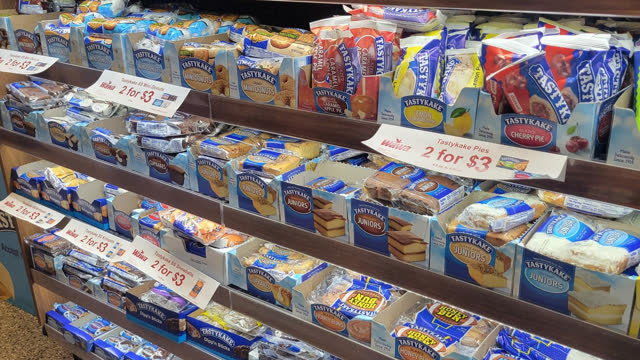
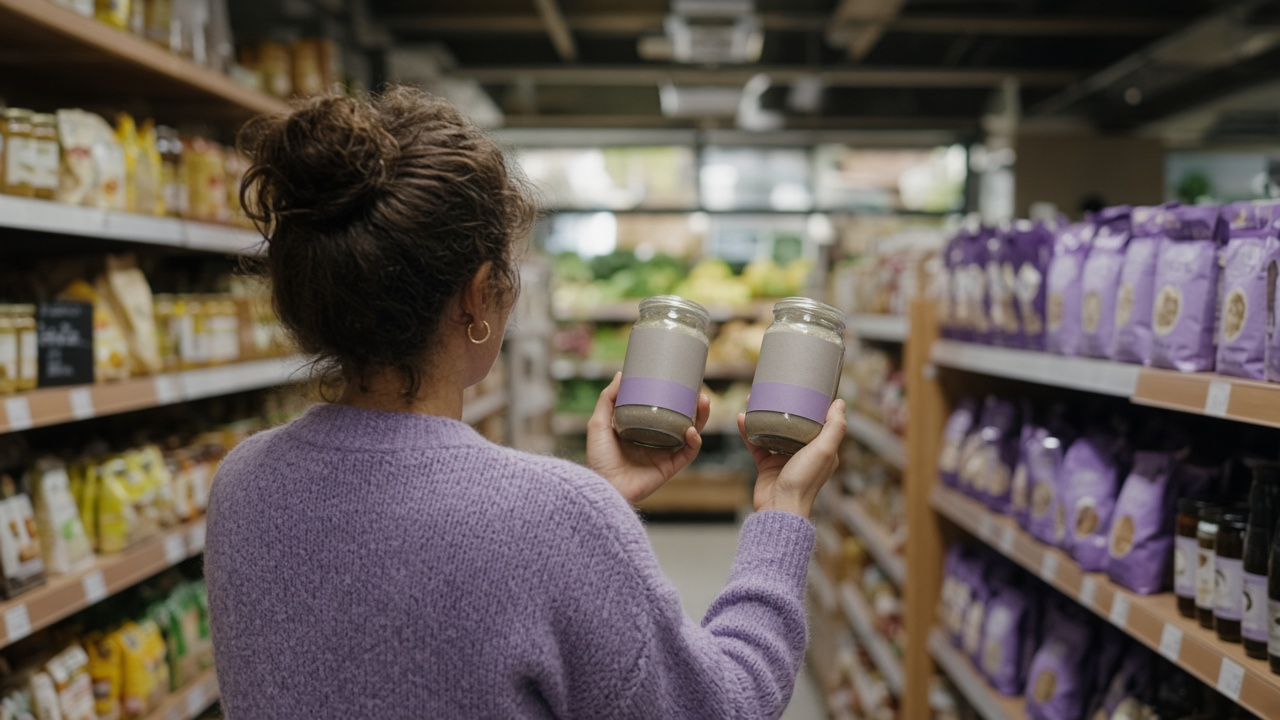
A shopper standing in the aisle does not compare you to a brand three shelves away or one they saw on social media. They compare you to the closest thing that looks like you and costs less. In many categories, that is the retailer’s own product, placed right beside you on purpose.
That changes what your price means. If the store brand is $4.99 and you are $7.99, the shopper is not judging $7.99. They are judging $3.00, and asking whether your product is $3.00 better. We made the broader case that price is a signal in Price Is a Positioning Tool. Next to a store brand, that signal gets tested on every trip.
Retailers also have every reason to keep pushing. Store brands give them margin and loyalty they own. On Oct. 29, NielsenIQ’s Jason Zelinski told C-Store Dive, “If you can develop products that are unique to you, that’s how you drive repeat trips.” Your buyer hears that message from their own leadership.
Where premium brands lose the comparison
When we review a brand that is losing units to the store brand, the problem is rarely that the price is too high in the abstract. It is usually one of these four.
1. Nobody measured the gap
The brand set its price from cost and margin targets, which is right, but never checked what the store brand charges per ounce, per serving, or per count in each account. The gap grew quietly as the national brand took price increases and the store brand held.
2. The reason is invisible
The product may truly be better: a cleaner formula, a better scent throw, more protein per serving. But the front of the pack does not say so in a way a shopper can see in a few seconds. A list of eight features on the back is not a reason. One clear difference on the front is. Our guide to assessing your differentiation walks through finding it.
3. The pack invites the comparison
Store brands often borrow the color, shape, and layout of the category leader. If your pack follows the same conventions, you have made it easy for the shopper to see the two as the same thing at two prices.
4. Promotions taught shoppers to wait
A brand that answers the store brand with deep, frequent discounts closes the gap for a week and then reopens it. Shoppers learn the real price is the sale price. We covered that trap in Promo Without the Hangover.
Earn the gap: a six step plan you can run this month
Here is the order we use, cheapest first.
- Walk the shelf and price the gap (free, one afternoon): in your top three accounts, photograph the shelf and record the store brand’s price per unit next to yours, by ounce, serving, or count, whichever the shopper uses. Write your gap as a dollar figure and a percentage. Do it again every quarter.
- Write the one reason (free): finish this sentence in under 12 words: “Pay more for us because…” If you need a second sentence, you do not have the reason yet. Test it on five shoppers who are not your friends.
- Put the reason on the front panel (low cost, next print run): the reason belongs in the first thing the eye lands on, in plain words. Move supporting proof, such as certifications or sourcing, right beside it. Any claim needs substantiation, so run new wording past counsel.
- Break the lookalike (low cost): pick one design element the store brand cannot easily copy, such as a distinct color block, shape, or icon, and own it. Being different at a glance is part of the reason.
- Manage the ticket with size, not discounts (moderate cost): if the dollar gap is the barrier, a smaller entry size can lower the price a shopper pays at the register while you protect per unit margin. A larger value size can do the opposite job for loyal buyers. Run every option through shelf price margin math before you pitch it to a buyer.
- Aim promotions at trial, not at matching (highest cost): use promotions to get your product into a new shopper’s hands, such as a first purchase offer, a sample, or a display tied to a reason to buy, not to sit at the store brand’s price. Set a limit on promoted weeks per quarter and hold it.
When the price fight is the wrong fight
Some products are close to a commodity, and the honest answer is that a shopper cannot see a difference. If your product is in that spot, holding a wide premium next to a store brand will cost you units every quarter, and no amount of trade spend will fix it.
You have three real choices. Build a difference that matters, which takes time and product work. Move to channels where the store brand is not your neighbor, such as specialty, club, or direct. Or price closer to the store brand and run the business on volume, with the margin math to prove it works. Each is a legitimate strategy. The one that does not work is staying where you are and hoping the shopper notices.
Store brand growth is not all bad news for national brands, either. Bakery & Snacks reported on July 28 that Grupo Bimbo, which competes with store brand bread across U.S. grocery, said on its second quarter call that it gained market share in every U.S. category it plays in. Strong brands can grow alongside a strong store brand. They just cannot ignore it.
Next step
Your price gap only works if your whole price ladder works, from cost to retailer margin to shelf. Our pillar guide, How to Price a Consumer Product So Retailers Say Yes and You Still Make Money, covers the full build. At Vantage Business Consulting, we help consumer brands set prices they can defend on the shelf and in the buyer meeting. If you are planning a launch, relaunch, or price change for 2027, the free Launch Scorecard below shows where your gaps are in about three minutes.