
The short answer: Most small brands run each launch from memory, so every launch repeats the last one’s mistakes. A go-to-market playbook is the written version of how your brand launches: who you sell to, what you sell and at what price, the calendar, the sell-in kit, the sell-through plan, the numbers you watch and the rules for when to stop. Write the first version from your last launch this month, then update it after every launch.
Ask a founder how the last launch went and you usually get a story. Ask how the next one will run and you get a different story. The steps live in the founder’s head, in an old email thread and in a spreadsheet nobody can find. So each launch gets built from scratch, and the brand pays for the same lessons twice.
This post is about fixing that: writing down your brand’s go-to-market playbook, the repeatable sales and marketing steps every launch runs the same way. Our post on launching a new retailer is a playbook for one launch. This is the brand’s full playbook, the one every launch runs from.
What a big brand just said out loud
Celsius Holdings reported its third quarter on Nov. 5. On the earnings call, the company said revenue was about $847 million, up about 17% from a year earlier, and that its Alani Nu energy drink brand had the biggest quarter in its history, with net sales of about $410 million, up about 24%.
Chairman and CEO John Fieldly used one word again and again. “Our playbook in Europe is working,” he said. He also said Alani Nu will enter select international markets in 2027 using the same market entry playbooks that helped the CELSIUS brand grow globally. Asked by an analyst about growth outside the U.S., he answered: “We are going to run that same exact playbook, being extremely disciplined.”
The CFO, Jarrod Langhans, described the 2027 pricing plan the same way: “a clear brand ladder across CELSIUS, Alani Nu, and Rockstar,” “a pack architecture that is consistent across the brands,” and a multi-year roadmap “so pricing and trade are managed as a system rather than as a one-year event.”
A playbook is not a guarantee. On the same call, the company said net sales of the CELSIUS brand itself were down about 6%. That is part of the point. When every launch runs the same steps, you can see which step broke. When every launch is improvised, all you know is that it did not work.
Why a small brand needs one more than a big one
A big company can absorb a messy launch. A small brand usually cannot. Each launch spends cash you will not get back if the first order does not turn, and the people who ran the last one may not be around for the next. Without a written playbook, three things happen:
- The launch lives in one head. When the founder is busy, the launch waits.
- Sales and marketing run different calendars. Sales celebrates the order while marketing is still planning, and the product sits on the shelf with nobody pushing it.
- The same lessons get learned twice. The late sell sheet, the missing case pack, the ad that ran before the product was in stock.
The ground is also moving under old playbooks. Circana’s 2025 New Product Pacesetters report (May 21, 2026) said 34% of consumers use AI to explore new CPG options and 25% have bought based on a personalized AI recommendation. A playbook written a few years ago has no section for that. Yours should.
Our founder lived this in home fragrance at Bath & Body Works, where the everyday line ran all year and a new seasonal collection followed every four to six weeks, from Spring to Back to School to two holiday drops. Our view from that work: a pace like that only holds when every launch runs off the same calendar and the same steps.
What goes in the playbook: eight sections
Keep each section to one or two pages. If a new team member cannot read the whole thing in an hour, it is too long.
- The buyer page. Who buys, the moment right before they buy, what they buy today instead, where they shop and who they trust. Our post on defining the buyer before you pick the channel has the one-page version.
- The offer. Your hero item, the price ladder, pack sizes and the margin at each channel. Celsius calls its version a brand ladder and a pack architecture. Yours can be one table.
- The launch calendar. Work back from the on-shelf or on-sale date. What happens each week, and who owns it.
- The sell-in kit. Sell sheet, pricing, the forecast, samples and answers to the questions every buyer asks. Write it once and update it, instead of rebuilding it for every meeting.
- The sell-through plan. What happens in the first six weeks after the product lands: in-store support, sampling, retailer media, social and email, all pointed at the stores and sites that carry you.
- The discovery basics. The product page, the retailer listing, reviews and plain answers that search engines and AI assistants can read. Our post on how CPG brands get found online has a one-hour check.
- The scorecard. The three to five numbers you watch every week, such as units per store per week, repeat rate and cost per new customer, with the number that means “fix it” and the number that means “stop.”
- The debrief. A one-page template you fill in 30 days after every launch: what worked, what broke, and what changes in the playbook.
Notice what is not on the list: a mission statement, a 40-slide brand book, a list of every channel you might try someday. Those can live somewhere else. The playbook is the part people use on a Tuesday.
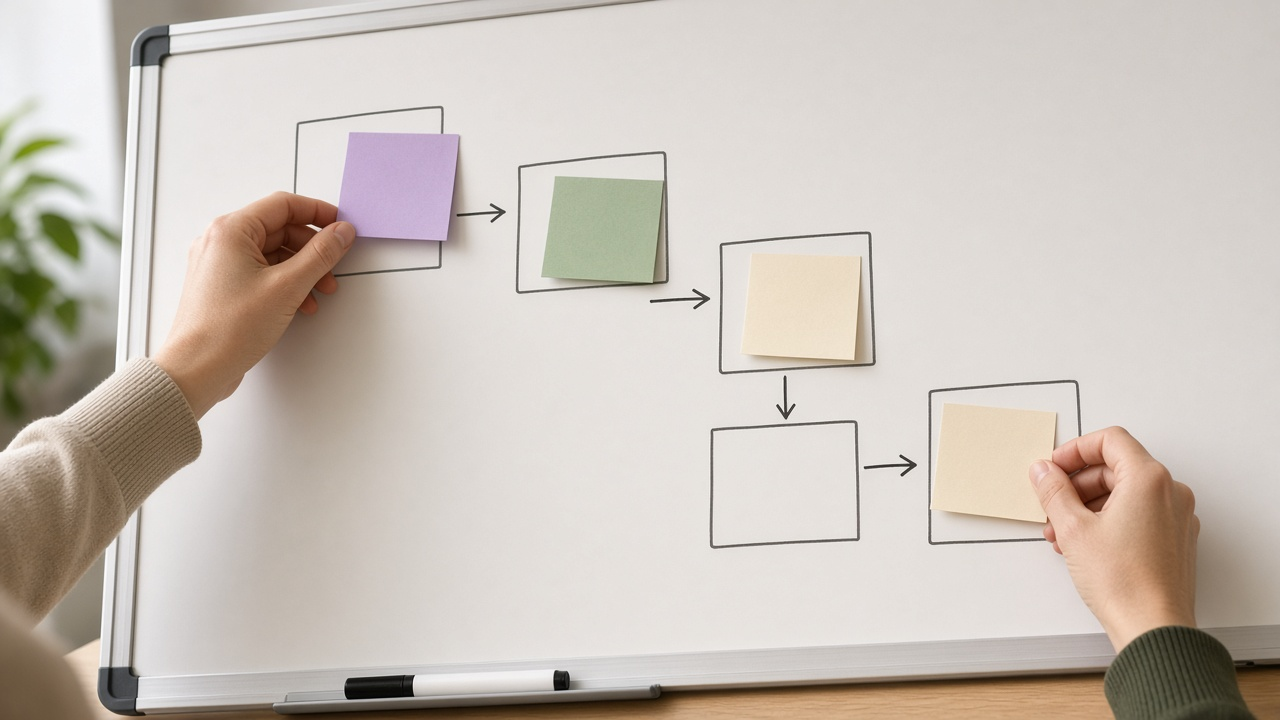
Build the first version this month
Cheapest steps first. You do not need a consultant or software to start. You need your last launch and an honest afternoon.
- Debrief your last launch (one afternoon, free). Pull the calendar, the emails, the sell sheet and the sales data. Write down what happened week by week, including what went wrong.
- Draft the eight sections (one week, free). One page each, rough is fine. Where you do not know the answer, write the question down. Those gaps are your first fixes.
- Put sales and marketing in one room (two hours, free). Agree on one launch calendar and one owner for each step. If one person does both jobs, that person still needs the calendar.
- Set your numbers and stopping rules (two hours, free). Pick the weekly numbers for the scorecard and write down the “fix it” and “stop” lines before the launch, not after.
- Turn the repeat work into templates (one week, low cost). Sell sheet, launch calendar, weekly report and debrief form. Every template you make is a decision you will not have to make again.
- Run the next launch from the playbook (your next launch). One owner keeps it open and checks the steps off. Where the team works around the playbook, note why.
- Debrief within 30 days and update (one meeting, free). Change the playbook, not just the notes. This is the step most brands skip, and it is the one that makes the next launch cheaper.
What not to do
- Do not build a binder nobody opens. Short pages that get used beat a long document that gets admired once.
- Do not copy a big brand’s playbook. Celsius brought in about $847 million in a single quarter, and its playbook is built for that scale. Borrow the habit of repeating what works, not their tactics.
- Do not let it live on one laptop. Put it where the whole team, including outside partners, can read it.
- Do not skip the debrief. A playbook that never changes is just a record of how you launched once.
Next step
The playbook holds the steps. The judgment behind those steps comes from launches that worked and launches that did not. Our pillar post, Go-to-Market Strategy Lessons From 34 Years of Launching Consumer Brands, covers what separates the winners. If you want a quick read on where your next launch has gaps, the free Launch Scorecard below takes about three minutes.